In most suburbs you can generalise. A place built out in one push has one generation of housing, one generation of drainage, and one broad answer that is right most of the time. It is why so much plumbing advice is written as rules of thumb.
This suburb does not work that way. It grew around a large institutional landholding, in stages, as land came out of it over a very long period. So streets a few hundred metres apart can be decades apart in age and in the drainage that went in with them, and the rule of thumb that fits one of them is wrong about the other.
Because land here was released progressively rather than all at once, there is no single housing era and no single answer about what is under the ground. That makes the age and material of your own pipework a question to establish rather than a thing to assume, and it means a neighbour's failure predicts very little about your house.
- Find out what you actually have rather than applying a general rule
- A camera and a look at the fittings answers in an hour what guessing gets wrong
- Do not read much into what happened three doors down
- Mention roughly when the house was built if you know it
- The river frontages developed on a different timetable again
On this page
1. The suburb was built in stages, not in a push
Gladesville is defined by an institution rather than by a housing type. A large site here operated for roughly a hundred and fifty years, and much of the surrounding land it once occupied has been progressively released over a very long period.
That is the entire mechanism, and it is worth being clear that it is a statement about the shape of the suburb and nothing else. We are not making any claim about services, ground conditions or anything else relating to that land, and anybody who does without evidence should be treated accordingly.
What it produced is a suburb assembled in pieces across decades. Different streets were developed at different times, to different standards, with the drainage of their own moment laid in with them.
Where everything went up in one decade, everything ages together and a neighbour's failure is a warning. Here it usually is not.
2. Why rules of thumb fail here specifically
Most plumbing generalisations are really statements about a cohort. Earthenware and galvanised in the older estates. Early PVC in the seventies. Solvent-welded PVC in newer work. Those are useful shortcuts where a suburb has one dominant vintage.
Apply the same shortcut across a suburb built in stages and it is right some of the time by accident. That is worse than having no rule, because a confident wrong answer gets acted on.
- A quote based on assumed pipe material may be pricing the wrong job.
- A method chosen for one material may not suit what is actually there.
- A prediction about what will fail next has no basis if the cohort assumption is wrong.
- An estimate of what is buried where may be describing a different street entirely.
None of that means anybody is being careless. It means the shortcut that works in most suburbs is unreliable in this one, and the honest response is to look.
3. What happened three doors down is about that house
This is the practical version and it cuts both ways, which is why it is worth stating.
In a single-cohort suburb, a neighbour's failure is genuinely a warning. Everything went in at the same time and it ages at the same rate, so the next one along is next in line.
Here that inference does not hold. A house three doors down may be twenty or forty years different in age with entirely different drainage. So a neighbour's expensive repair is not a reason to panic, and a neighbour's clean bill of health is not a reason to relax.
What is useful from a neighbour is different: what era their house is, what was found, and whether the two houses are actually from the same stage of the suburb. That last question is the one worth asking.
4. What to establish about your own property
- Roughly when the house was built. Even a decade is useful.
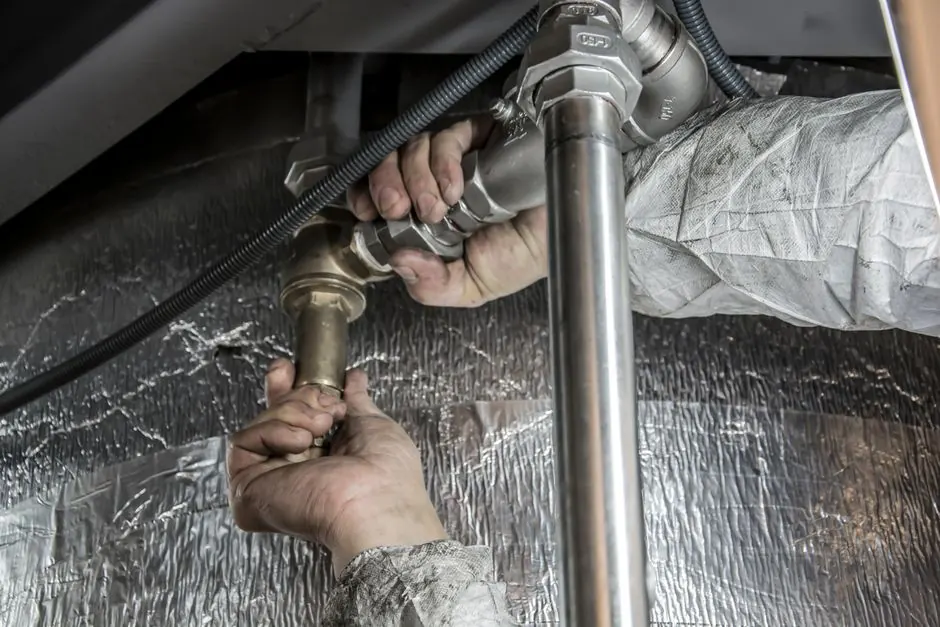
- What material the visible pipework is: under the house, at the meter, at the fittings.
- What the drainage actually looks like, which needs a camera rather than a guess.
- Whether there has been any significant work, and when.
- Where the lines run, from a sewer service diagram and a locate.
- The age of the hot water system from its compliance plate.
Six answers, one visit for most of them, and they replace an unreliable generalisation with facts about your actual property. On a street where the general rule is not trustworthy, that is worth more than it would be elsewhere.
Not sure what you have got?
A camera and a look at the fittings answers in an hour what guessing gets wrong.
5. The river frontages are different again
One further layer worth knowing. The properties facing the water at Tennyson Point, Putney and Huntleys Point were taken up because of the water, on a different timetable from the land behind them.
So they are not simply another stage of the same sequence. They are a separate pattern of development with their own timing, which adds a third possibility to any assumption somebody might make from a map.
The practical implication is the same as everything else here: say where you are, and expect the answer to be specific to that rather than to the suburb name.
6. What to tell us on the phone
- The suburb and roughly where in it, because that genuinely narrows the era.
- Roughly when the house was built, if you have any idea.
- Whether it is a house, a unit or something in between.
- What material you can see, if any is visible.
- Whether anybody has worked on the drainage before, and what they said.
- Whether this is the first time or a recurring problem.
That is more front-loading than most suburbs need, and it is the honest consequence of a place assembled over decades. It is also considerably cheaper than finding out with a van outside.
- The suburb grew around a large landholding, in stages, as land came out of it.
- Streets a few hundred metres apart can be decades apart in age and in drainage.
- Rules of thumb about pipe material and era are unreliable here in a way they are not elsewhere.
- A neighbour's failure is about that house, not about yours.
- The river frontages developed on a different timetable again.
- Establish what you actually have. A camera and the fittings answer it in an hour.
No single era FAQs
Why can you not just tell me what my pipes are likely to be?
Because in a suburb assembled over decades that guess is right some of the time by accident, and a confident wrong answer gets acted on. Looking takes an hour and replaces it with a fact.
My neighbour had a big repair. Should I be worried?
Not automatically. In a single-cohort suburb it would be a warning. Here their house may be decades different from yours with entirely different drainage. The useful question is whether the two houses are from the same stage.
Does the age of the house tell you the material?
It narrows it usefully, which is why it is worth mentioning. It does not settle it, because later work may have replaced sections and because the transitions between materials were not sharp.
Is the hospital site relevant to my plumbing?
No, and we would not suggest it is. It explains why the suburb developed in stages and nothing more. We are not making any claim about services or ground conditions on or near that land, and nor should anybody else without evidence.
What is the cheapest way to find out what I have?
Look at what is visible first: under the house, at the meter, at the fittings. That costs nothing. A camera on the drainage answers the buried part and is worth having once as a baseline.
Are the waterfront streets different?
They were taken up on a different timetable, for the water rather than as part of the same sequence, so they are a separate pattern again. It is another reason to say where you are rather than which suburb.